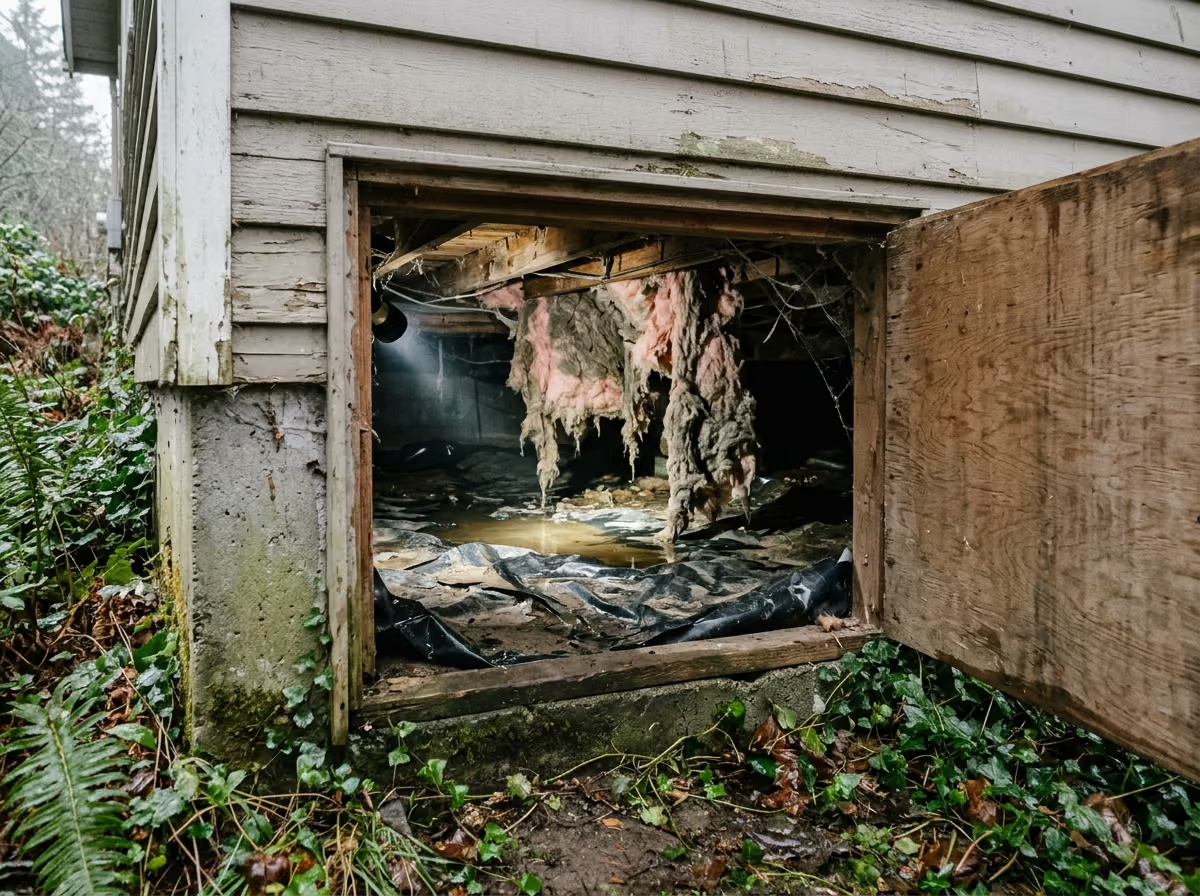
Water in my crawl space after heavy rain: is it normal?
Damp soil or a few wet spots after a big storm is common here. Standing water is not, and it shouldn't stay. November is Bellingham's wettest month, with 5.20 inches of rain in a normal year (NOAA 1991–2020 normals).
When storms come back to back, the soil around the house fills with water. That groundwater pushes up through the dirt floor and in through cracks in the foundation. Crews call this seepage. Clay soil makes it worse, because it drains slowly.
Look for these signs of seepage:
- White chalky residue on the concrete walls or footings. It's mineral salt left behind as water soaks through and dries.
- Water lines or mud marks on the foundation walls.
- A musty smell in the rooms above.
- A sagging or wet vapor barrier, the plastic sheet over the dirt.
In December 2025, damage in Nooksack ranged from water in crawl spaces and insulation to 10 to 20 inches inside homes (Cascadia Daily News, 2025). River floods can fill a crawl space in hours.
Where crawl space water comes from
The source decides how dirty the water is and who fixes the cause.
| Source | What you'll see | Who fixes the cause |
|---|---|---|
| Rain and groundwater seepage | Water after storms, chalky residue, water at the low side | Drainage or waterproofing company |
| Gutters and downspouts dumping by the foundation | Water near one corner, worse in heavy rain | You or a gutter company |
| Broken supply pipe or frozen hose bib | Water that keeps coming, even in dry weather | Plumber |
| Leaking sewer line | Sewage smell, toilet paper or waste | Plumber; the cleanup is Category 3 |
| River or creek flooding | Muddy water, often deep | No quick fix; see the flood guide |
Sewage in a crawl space is Category 3 water, so contaminated insulation and vapor barrier must be removed. See sewage cleanup, flooded basement cleanup and the Whatcom County flood recovery guide.
Water in the crawl space now? What to do first
Don't crawl in until you know it's safe. Then stop the water and take photos.
- Stay out if there's wiring or a junction box near the water. If anything electrical could be wet, have an electrician check it first.
- Shut the main water valve if it might be a pipe. If the water keeps rising in dry weather, a pipe is likely leaking.
- Sniff before you look. A sewage smell means Category 3 water. Don't go in without gloves, boots and a mask.
- Take photos from the access hatch. Get the water level, the vapor barrier and any sagging insulation.
- Clear the gutters and downspouts if rain is still falling, so roof water flows away from the house.
- Call your insurer if a pipe burst. Sudden leaks are more likely to be covered than seepage.
How crawl space water removal works
The restoration company's job is to get the water out, remove what can't be saved and dry the space. Here's the usual order.
- Find the source. The crew checks for a broken pipe, a sewer leak or groundwater seepage.
- Pump out standing water. A pump moves the water out through the hatch or a vent.
- Remove what's ruined. Wet insulation that's sagging or falling, and a torn or dirty vapor barrier, come out.
- Clean if the water was dirty. After sewage or floodwater, the crew cleans and applies an antimicrobial to the framing. An antimicrobial slows mold and bacteria.
- Dry the space. Dehumidifiers and air movers, which are high-speed fans, dry the joists and subfloor.
- Measure before closing up. The crew should take moisture readings on the wood and show them to you.
- Replace the barrier and insulation. This is done only once the wood is dry.
Ask the company for a written estimate before any non-emergency work. Ask to be shown what needs to come out and why before insulation or flooring is removed. See structural drying.
Standing water under the house? Call (360) 555-0123 to be connected with a local restoration company. Say how deep the water is and whether it smells.
Wet insulation, vapor barriers and mold
Wet insulation usually has to come out. Fiberglass batts soak up water, get heavy and sag away from the floor. They also hold moisture against the wood for weeks.

The vapor barrier is the plastic sheet over the dirt floor. It keeps ground moisture from rising into the crawl space. Water trapped on top of it can't drain away, so a flooded barrier often gets cut out and replaced.
Speed matters for mold. The EPA says to dry water-damaged areas within 24 to 48 hours to prevent mold growth. Crawl spaces are dark and damp, so drying them takes more equipment than a room upstairs. See mold after water damage and mold remediation.
Mobile and manufactured homes: water in the belly pan
Mobile and manufactured homes have a belly pan, also called an underbelly. It's a fabric or plastic sheet under the floor that holds the insulation and the pipes. When a pipe leaks or floodwater rises, water can collect in the belly pan and stay hidden.
Mobile and manufactured homes make up 9% to 18% of housing in the Ferndale, Blaine, Everson and Custer ZIP codes (US Census ACS 2020–2024). A sagging belly pan, a wet spot in the skirting or a musty floor are the usual signs. The crew opens the belly pan, drains it, pulls wet insulation and dries the floor before the pan is patched. See Ferndale and Everson, Nooksack and Sumas.
Sump pumps, drainage and waterproofing: who fixes the cause
Restoration companies remove the water and dry the crawl space. Crawl space waterproofing and drainage are a separate trade from water damage restoration. If water comes back after every storm, call a crawl space or waterproofing company once the space is dry.

Common fixes they offer:
- A sump pump. A pump in a pit at the low point pushes water out before it pools. Ask about a battery backup in case a storm knocks out the power.
- Drains around the footing. A perimeter drain collects groundwater and sends it to the sump or away from the house.
- Grading and downspouts. Ground sloped away from the house and downspouts that drain well away from the foundation help.
- Encapsulation. A heavy liner seals the floor and walls, often with a dehumidifier.
Sudden Valley sits in the Lake Whatcom watershed, which has a seasonal rule. From October 1 to May 31, Whatcom County bars dirt work that disturbs more than 500 square feet. Plan digging, drains and grading for summer there. See Sudden Valley.
Does insurance cover crawl space water?
It depends on where the water came from. Check your policy before work starts.
- Burst or leaking pipe. Sudden leaks are usually covered if you report them quickly.
- Rain or groundwater seeping in. Usually not covered. Insurers treat it as a maintenance issue.
- Sewer line backup. Usually covered only with a sewer backup endorsement.
- River or creek flooding. Needs a separate flood policy.
What crawl space water removal costs
National figures put minor crawl space moisture repairs at about $250 to $4,000. Standing water and the damage it causes usually run about $2,000 to $10,000 (Angi, 2025 national data). We found no reliable Bellingham average.
The price depends on how much water there is and whether it's clean or sewage. It also depends on how much insulation and barrier comes out and how hard the space is to reach. Crawl space waterproofing or drainage work is priced separately by that contractor. See water damage restoration cost.
How this site works
Bellingham Water Damage is a referral service run by Mateo. When you call, you're connected to a local water damage restoration company that serves your area. That company does the work, and we may receive a referral fee. Check any company on L&I Verify before work starts.
Common questions
Who do I call for water in my crawl space?
Call a restoration company to pump out the water and dry the space. Call a plumber if a pipe is leaking. Call a waterproofing or drainage company if rain keeps getting in. See who to call for water damage.
Can I fix standing water in my crawl space myself?
You can pump out a little clean water with a utility pump if no wiring is wet. You can also clear gutters and extend downspouts. Pulling wet insulation and drying the framing properly takes commercial equipment and moisture meters. For sewage or deep water, hire a pro.
Can I use a regular dehumidifier in a crawl space?
A home dehumidifier can help a damp crawl space in mild weather. It usually isn't enough after standing water. Crawl spaces are cold and very wet, so restoration crews use larger dehumidifiers built for those conditions. The EPA suggests keeping indoor humidity below 60%.
Is standing water in the crawl space a deal breaker when buying a house?
Not always, but find out why it's there. Ask the seller for repair records and get a drainage contractor's opinion. Also check for mold, rotted wood and wet insulation. Factor the cost of drainage work into your offer.
Will blocking crawl space vents with foam in a freeze stop pipes freezing?
Closing vents during a hard freeze can help keep pipes warmer. Reopen them when the freeze ends so the space can dry (NC State Extension). Insulating the pipes themselves gives more reliable protection. See burst and frozen pipe water damage.
What does white chalky residue on crawl space walls mean?
It's a sign water has been soaking through the concrete. As the water dries, it leaves mineral salts on the surface. It isn't mold, but it means the foundation is getting wet.