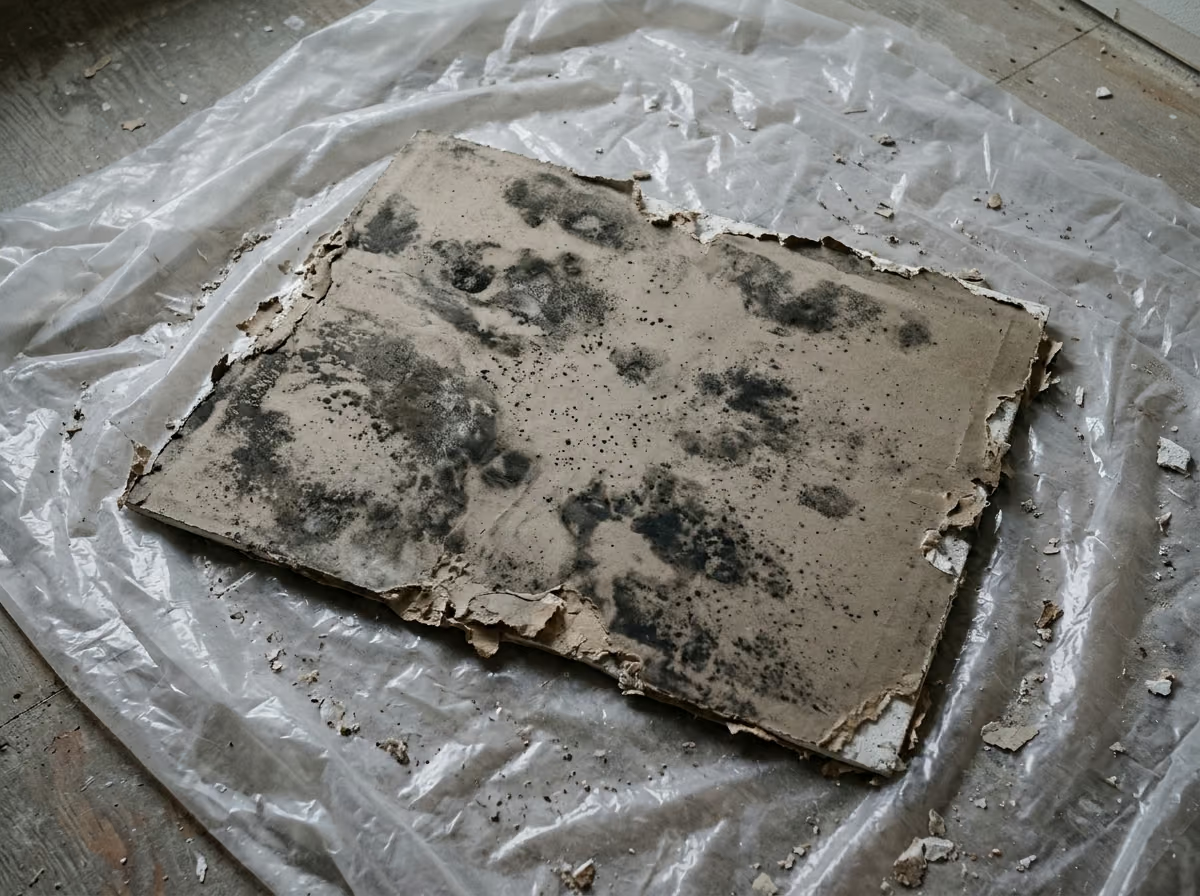
How long after water damage can mold grow?
Mold can begin to grow within 24 to 48 hours on materials that stay wet. WA DOH says mold may start to grow in 24 to 48 hours. The EPA's flood cleanup guide says mold can grow on wood, drywall, carpet and furniture that stay wet more than 24 hours.
Mold isn't usually visible that fast. Early growth is hidden on the back of drywall, under carpet pad or inside wall cavities. By the time you see spots or smell a musty odor, it has often been growing for a while.
Mold needs three things: moisture, something to feed on, and time. Drywall paper, wood, dust and carpet backing are all food. Take away the moisture and the mold can't grow.
What the EPA's 24 to 48 hours actually means
The 24 to 48 hours is a drying target, not a countdown to a moldy house. The EPA says to dry water-damaged areas and items within 24 to 48 hours to prevent mold growth.
So missing the window doesn't mean mold is certain. It means the risk climbs the longer materials stay wet. After a flood, fully drying a house usually takes several days to weeks (EPA). That's why the goal is to start drying fast, not to finish in two days.
How do you know something is dry? Use a moisture meter. The EPA says materials should read 15% or less before you refinish them. A surface that feels dry can still be wet inside.
Does mold grow faster in Bellingham's damp climate?
There's no study showing mold grows faster in Bellingham than elsewhere. But a damp climate makes drying slower, and slow drying gives mold more time.
Bellingham gets about 34.7 inches of rain in a normal year (NOAA, 1991–2020 normals at Bellingham airport). November is the wettest month, at about 5.2 inches. From October to February, days are cool and wet, and outside air holds a lot of moisture. Opening windows dries a house less in those months than on a dry summer day.
Crawl spaces are a common trouble spot here. They're dark, cool and often damp, and few people look in them. See crawl space water removal for crawl space drying.
Signs of mold after a leak
A musty smell is often the first sign. You may smell mold before you see it.

Watch for:
- A musty smell that won't go away, especially in a closet, basement or crawl space.
- Spots or fuzz on drywall, baseboards, ceilings or wood. Mold can be black, green, white or gray.
- Stains that grow or darken on a ceiling below a bathroom or roof leak.
- Bubbling paint or soft drywall near a tub, shower or sink.
- Mold that keeps coming back in the same bathroom corner. That often points to hidden water, such as a slow leak behind tile.
- Warped flooring or a sour smell under laminate.
To find a hidden leak behind a musty smell, start with what uses water nearby. Check sinks, toilets, the dishwasher, the fridge line, the water heater and exterior walls. A moisture meter can find damp drywall before mold shows. See leak water damage for common leak sources.
Is mold after water damage dangerous?
For most healthy people, mold causes mild symptoms or none. For some people, it can cause real health problems. WA DOH says most molds don't harm healthy people, but people with allergies or asthma may be more sensitive.
The CDC lists common symptoms from damp, moldy homes:
- Stuffy nose and sore throat
- Coughing or wheezing
- Burning eyes
- Skin rash
Who is at higher risk. People with asthma or mold allergies can have severe reactions (CDC). People with weak immune systems or chronic lung disease can get lung infections from mold (CDC). The EPA says children and pregnant people should not take part in flood cleanup work.
Color doesn't decide the danger. You'll hear a lot about "black mold." WA DOH says the color doesn't matter and all indoor mold should be removed. The CDC says you don't need to know the type of mold before cleaning it up.
If anyone has symptoms or a health condition, talk to a doctor. The EPA suggests seeing a health professional before starting cleanup if you have health concerns.
What's safe to do yourself after water damage
You can do a lot to stop mold in the first two days. These steps are safe for most healthy adults.
- Stop the water. Shut off the main valve or the fixture's valve. Have a plumber fix the leak.
- Remove standing water. Mop or wet-vac water off hard floors. Keep away from water near outlets or cords.
- Pull out what can't be dried. The EPA says to throw away materials that soak up a lot of water and can't be cleaned and dried. Wet carpet pad, soaked insulation and cardboard boxes usually go.
- Dry the rest. Use fans and a dehumidifier on wet areas that don't have mold yet. Open cabinet doors and pull furniture away from walls.
- Don't use a flood-hit furnace to dry the house. If any part of the HVAC system got wet in a flood, the EPA says not to use it for drying. Also don't run a heating system you suspect has mold in it (EPA).
- Check with a moisture meter. Look for readings of 15% or less before you paint, close walls or lay new flooring (EPA).
If mold is already growing, change the order. Clean visible mold before you run fans. The EPA says to wait to start fans or dehumidifiers until you've gently cleaned all the mold you can see.
Cleaning a small area. For mold under about 10 square feet, WA DOH suggests scrubbing with detergent and warm water, then drying completely. DOH's 2026 fact sheet says to avoid bleach and never mix cleaners. Wear an N95 mask, goggles, gloves and long sleeves. Never paint or caulk over mold (WA DOH).
When to call a professional
Call a professional when mold or water damage is beyond a quick cleanup. Here's when that is:

- The mold covers more than about 10 square feet (EPA), or about 3 feet by 3 feet (WA DOH).
- Water got inside walls, ceilings or under floors and you can't dry it with fans.
- The water was sewage or floodwater. Those materials need to come out, and the work needs protective gear. See sewage cleanup.
- You smell mold but can't find it. It may be inside a wall or crawl space.
- Someone in the home is at higher risk: a baby, a pregnant person, or someone with asthma, lung disease or a weak immune system.
- The building is still wet after two or three days of your own drying.
- The HVAC system got wet or smells musty.
For active water damage, a restoration company dries walls, floors and framing with air movers and dehumidifiers. It checks the result with moisture meters. That drying is what prevents mold. See structural drying.
For mold that's already growing, you need mold remediation: containment, removal and cleaning. See mold remediation for what that involves and how to check a company.
Still wet, or worried about mold? Call (360) 555-0123, answered 24/7, to be connected with a local restoration company. Ask on the call whether the company also handles mold.
Renting in Bellingham: who deals with the mold?
If you rent, tell your landlord about the leak in writing right away. Delays can make mold worse and lead to disputes over who pays.
Washington law (RCW 59.18.060) requires landlords to give tenants Department of Health information about mold. Landlords must also keep the unit reasonably weathertight. Who pays for the cleanup depends on what caused the water. See rental water damage in Bellingham for tenants and landlords. That guide covers the local rules, and this site doesn't give legal advice.
How this site works
Bellingham Water Damage is a referral service run by Mateo. When you call, you're connected to a local water damage restoration company. That company does the work, and we may receive a referral fee. Check the company on L&I Verify before work starts.
Common questions
Should I point fans at mold or wet discolored spots?
Not at mold. Clean the visible mold first, then dry the area (EPA). Fans are fine on wet spots that don't have mold yet. Discolored drywall that stays damp may already have mold behind it, so check it before aiming a fan at it.
Is black mold in my attic an emergency?
Usually not an emergency, but it needs attention soon. Attic mold most often comes from a roof leak or poor venting. Find and fix the moisture source first. Large areas or mold on roof sheathing are a job for a professional. See leak water damage for roof leaks.
What should I do if I find mold behind my dishwasher?
Turn off the dishwasher's water valve, usually under the sink. Then pull the dishwasher out and check the subfloor and cabinet sides. A slow drip from the supply line or drain hose is the usual cause. Small spots on hard surfaces can be cleaned. Soft or moldy subfloor and cabinet bases may need to come out.
What should I do if I find mold during a renovation?
Stop and seal off the area with plastic before you keep cutting. Find the moisture that caused it. In older homes, check for asbestos before you remove more drywall or flooring. See Bellingham water damage permits.
Can a small leak upstairs cause mold on the ceiling below?
Yes. A slow drip from a toilet, tub or shower upstairs can soak the drywall below for weeks before a stain shows. Mold can grow on the back of that ceiling drywall. A moisture meter can show how far the water spread.
Will water under laminate flooring cause mold?
It can. Laminate traps water underneath, so the pad and subfloor stay wet. Laminate usually has to come up so the subfloor can dry.
Do I really need to cut out drywall to fix mold?
Usually, yes, if mold is growing in the drywall. Drywall is porous, so mold grows into it, not just on it. Wet drywall without mold can sometimes be dried in place. A moisture meter and a close look decide which.