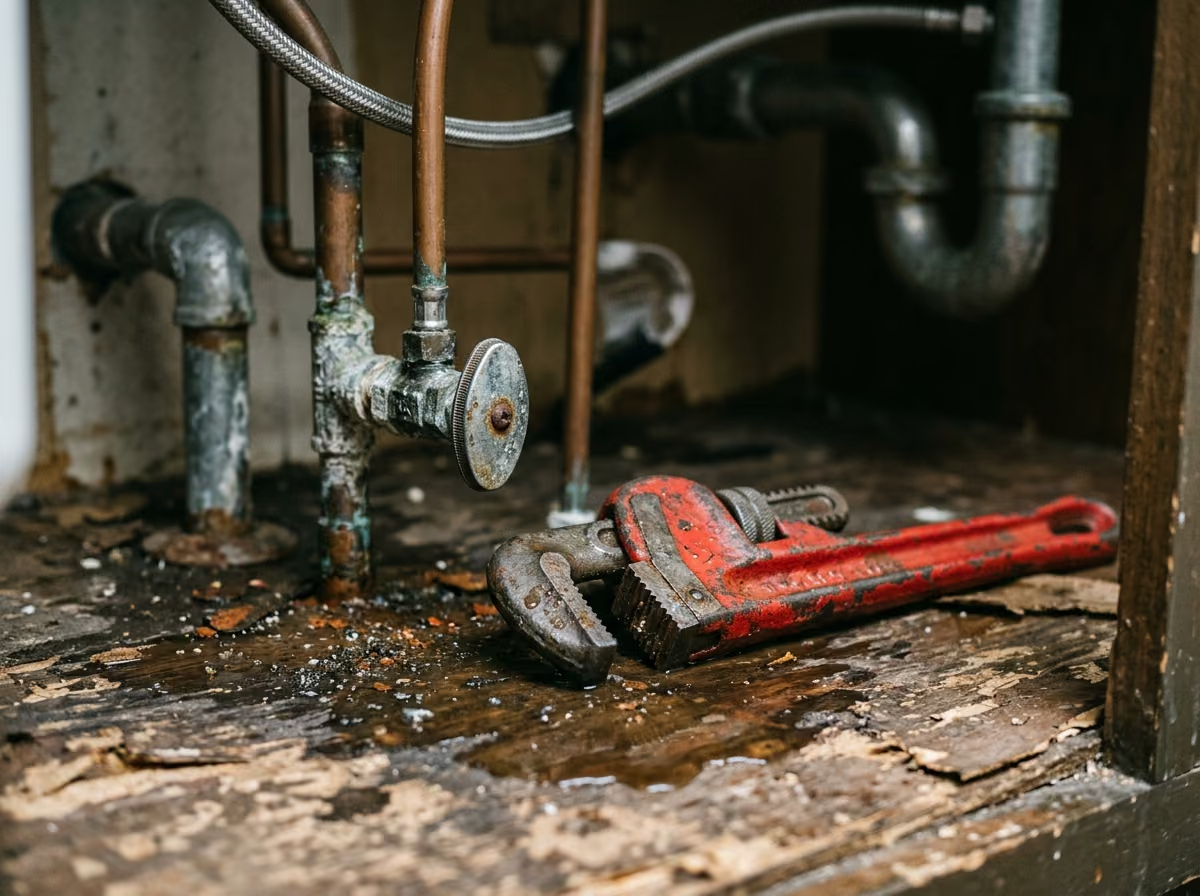
Who do I call first for water damage?
Stop the water before you call anyone. Turn off the main water valve, or the valve under the fixture. Then use this order:
- Anyone who can stop the source. That's a plumber for pipes, a roofer for a roof leak, or the water heater shut-off for a tank.
- A restoration company if water has soaked carpet, pad, drywall or the space under the house.
- An electrician if outlets, the panel or wiring got wet.
- Your insurance company, once the water is stopped and you've taken photos.
- Your landlord or HOA if you rent or live in a condo.
The plumber and the restoration company can work the same day. Drying can start once the water is off, even before the final pipe repair.
Who fixes what: a quick guide
Each trade fixes a different part of the problem. Most water damage needs at least two of them.
| Who | What they fix | Call them when |
|---|---|---|
| Plumber | Pipes, fixtures, water heaters, drains and your side sewer line | Water is still leaking, a pipe burst or a drain backed up |
| Restoration company | Water removal, tear-out of ruined materials, drying, sewage cleanup | Floors, walls, carpet or a crawl space got wet |
| Roofer | Roof, flashing and gutters | Water comes through the ceiling when it rains |
| Electrician | Wiring, outlets, breakers and panels | Anything electrical got wet |
| Crawl space or waterproofing company | Drainage, sump pumps, vapor barriers and encapsulation | Water comes back under the house after every storm |
| General contractor | Rebuild: drywall, flooring, cabinets and trim | The house is dry and needs putting back together |
| You (DIY) | Small clean spills on hard floors | Water didn't soak into walls, carpet pad or subfloor |
Washington's electrical rules are strict after a flood. Breakers, fuses, outlets and switches that were underwater must be replaced, not dried and reused (WA L&I). Any wiring change needs a permit.
Plumber or restoration company first?
Call the plumber first if water is still coming in. Call the restoration company first if the water has stopped but things are wet. Plumbers fix the pipe. They usually don't dry walls and floors.
A restoration company finds where the water spread and dries it. It uses moisture meters to read inside walls and under floors. It runs commercial air movers and dehumidifiers. It also keeps a drying log your insurer can check.
If a frozen pipe burst, see burst and frozen pipe water damage. For leaks from a water heater, dishwasher, toilet or roof, see leak water damage.
Crawl space and waterproofing companies
Call a restoration company to get water out of a crawl space and dry it. Call a crawl space or waterproofing company to keep it from coming back. These are separate trades, and most homes with repeat crawl space water need both.

Water under the house is a common Bellingham question. Ask yourself which of these fits:
- Water appeared once, after a pipe or hose bib broke. Call a plumber for the pipe and a restoration company for the water and wet insulation.
- Water shows up after every heavy rain. That's groundwater or drainage. Get the space dried, then have a crawl space or waterproofing company look at drains, grading or a sump pump.
- It smells like sewage. Call a plumber for the sewer line and a restoration company for the cleanup.
A waterproofing company may offer to install a sump pump or liner over standing water. Ask whether the space will be pumped out and dried first. Covering wet insulation and wet wood can trap moisture. See crawl space water removal.
Restoration company or general contractor?
Use a restoration company for the wet stage and a general contractor for the rebuild. A restoration company has the drying equipment and meters. A general contractor puts back drywall, flooring and cabinets.
Some restoration companies also rebuild. Others hand the rebuild off or leave it to you. The rebuild isn't an emergency, so it's a good time to get more than one bid. See the water damage restoration process for how the handoff works.
A general contractor shouldn't close up walls until the drying log shows they read dry. Walls closed up wet can grow mold out of sight. Whoever you hire, check that they're registered with WA L&I. Washington requires contractor registration for construction work.
Not sure if you need a restoration company? Call (360) 555-0123. Describe what's wet, and ask the company whether the job needs drying equipment at all.
Sewer backups and broken water lines: the City or you?
The City handles its public sewer and water mains. You handle the pipes on your side. That split decides whether you call the City first or a plumber.

Sewer backup. In Bellingham, the property owner owns the side sewer, the pipe from the house toward the City main. The City of Bellingham says it isn't responsible for repairing side sewers, under BMC 15.12.060. Report a sewer backup to City Public Works first. Its crews check the City main 24/7. If the City main is flowing, a plumber clears or repairs your line. A restoration company then cleans up. See sewage cleanup.
Some older neighborhoods back up again and again. In December 2025, about 10 houses in the Lettered Streets flooded with sewage and stormwater (Cascadia Daily News, 2025). See Lettered Streets and Downtown.
Water service line. The City maintains the public line and the water meter. The pipe from the meter to your house is private, so the owner maintains it (City of Bellingham). A leak on that pipe is a plumber's job.
What can I do myself before help arrives?
You can do a lot to limit the damage while you wait. These steps are safe for most people:
- Shut off the main water valve.
- Turn off power at the panel only if you're standing on a dry floor.
- Take photos and video of every wet area before you move anything.
- Mop or wet-vac clean water off hard floors.
- Move rugs, furniture and boxes out of the water. Put foil or blocks under furniture legs.
- Hang wet curtains and lift skirts off the floor.
- Keep doors and windows closed in cold, damp weather, and run a dehumidifier if you have one.
Don't do these:
- Don't walk into water that might be touching outlets or cords.
- Don't use a household vacuum on water.
- Don't touch sewage or floodwater without gloves, boots and eye protection.
- Don't throw away damaged things until they're photographed.
When can I skip a professional?
A small spill of clean water on tile, vinyl or sealed wood is usually a DIY job. If you dry it within a few hours and nothing soaked in, you may not need anyone.
Call a pro when any of these are true:
- Water soaked into carpet pad, drywall, insulation or a subfloor.
- The water came from a sewer, a toilet with waste, or outside flooding.
- Water got under the house or into a ceiling.
- You can't tell how far it spread.
Are rental dehumidifiers and fans good enough?
For a small, clean-water spill, rented equipment can help. For wet walls, subfloors or a crawl space, a rental often isn't enough. The bigger problem is knowing when things are actually dry.
NDSU Extension (2023) says a wood moisture meter is the only accurate test for wet wood. It also says wood should read below 15% before walls are closed. If you dry it yourself, rent or borrow a meter too.
Can I save money doing the demo myself?
Sometimes, but the savings can disappear quickly. Tearing out wet drywall and flooring yourself may cut labor costs. It can also create bigger problems if you skip these checks.
- Asbestos. In Whatcom County, remodeling or demolition projects must check for asbestos before starting (Northwest Clean Air Agency). Older drywall, ceilings and flooring are the usual concern. About 43% of Bellingham homes were built before 1980 (US Census ACS 2020–2024).
- Lead paint. Homes built before 1978 may have lead paint. Homeowners working on a home they live in generally aren't covered by the EPA's lead rule for paid contractors. Sanding or cutting painted surfaces still raises dust, so protect yourself and your family.
- Insurance proof. Photograph everything and keep a sample of removed material if your insurer asks. Your adjuster may question removal it can't see.
- Hidden water. Without a meter, you may stop tearing out too soon or rip out too much.
- Sewage. Material touched by sewage needs protective gear and proper disposal. That's rarely a good DIY job.
A middle path is common. Have a restoration company extract the water, remove what must go and set up drying. Then do some rebuild work yourself once everything reads dry.
When everyone in town is calling: big storms and freezes
During a regional flood or freeze, every plumber and restoration company gets calls at once.
If you're waiting, keep limiting the damage:
- Keep extracting clean water and run any fans or dehumidifiers you have.
- Pull wet rugs and move belongings to a dry room.
- Photograph everything, and write down when the water started.
- Call your insurer to open a claim.
Be careful with anyone who knocks on your door after a storm. After the December 2025 floods, WA L&I warned about uninvited "contractors" who take a deposit, then do partial work or disappear. It also warned that unregistered contractors usually have no bond. Check any contractor on L&I Verify before you pay.
How this site works
Bellingham Water Damage is a referral service run by Mateo. When you call, you're connected to a local water damage restoration company that serves your area. That company does the work, and we may receive a referral fee. We don't send plumbers, electricians or waterproofing companies.
Need the water removed and the house dried? Call (360) 555-0123. Calls are answered 24/7 for Bellingham and all of Whatcom County.
Common questions
Could tree roots break my water service line, and who do I call?
Call a plumber. Roots can crack or crush buried pipe. In Bellingham, the pipe from the meter to your house is the owner's to maintain. If water is pooling near the meter or in the street, report it to City Public Works, which takes urgent calls 24/7.
Should I call my insurance company or the contractor first?
Stop the water and take photos first. Then you can call both. Drying shouldn't wait for an adjuster, because your policy expects you to limit the damage. See insurance claim help.
Do I need a restoration company if I already dried the leak with fans?
Maybe not. If the water was clean and only on hard surfaces, fans may have been enough. If it reached carpet pad, drywall or the subfloor, have it checked with a moisture meter. Surfaces can feel dry while the inside is still wet.
Can a handyman fix water damage?
A handyman can help with small rebuild tasks after everything is dry. Most don't have drying equipment or moisture meters. In Washington, construction work generally needs a contractor registered with L&I.
Who do I call for water in the crawl space?
A restoration company for the water and wet insulation, and a plumber if a pipe is leaking. Call a crawl space or waterproofing company if rain keeps getting in. See crawl space water removal.