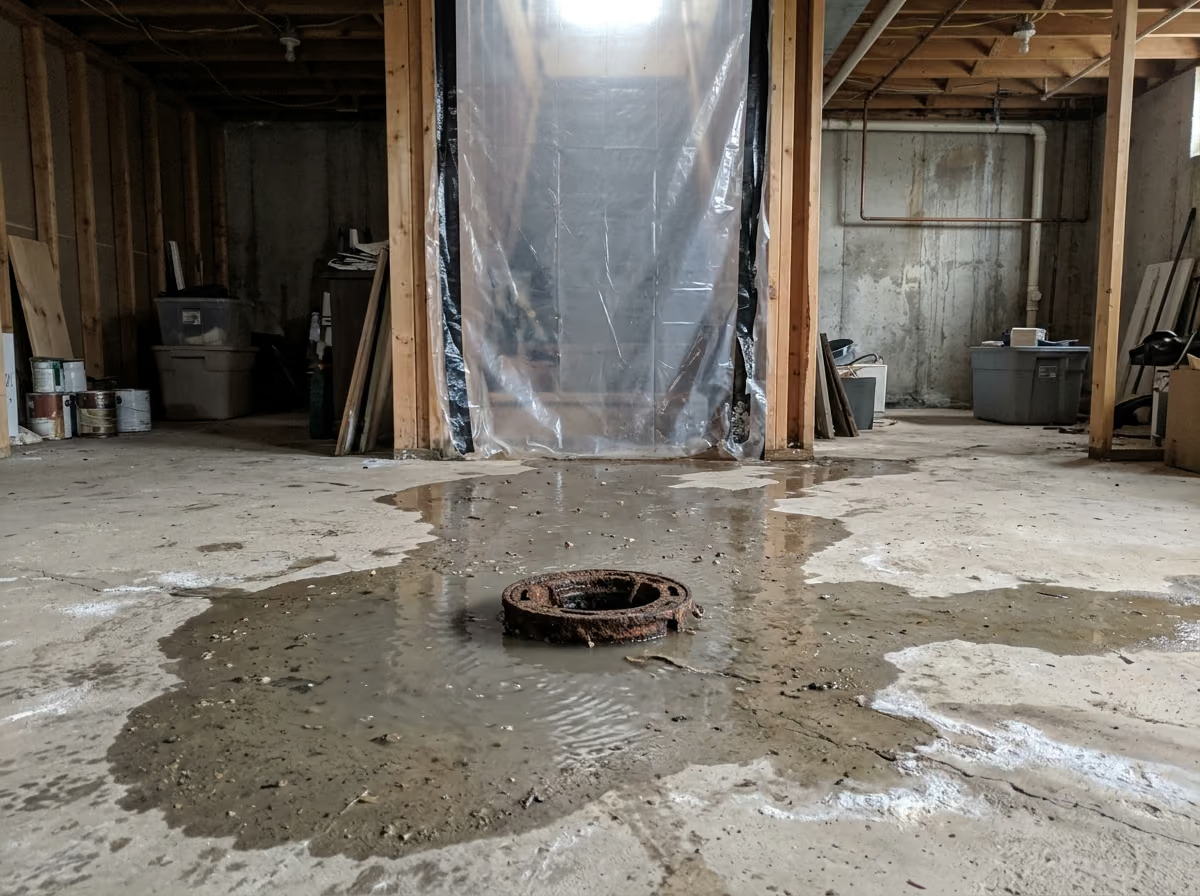
Sewer backup in the house right now? What to do first
Stop adding water, stay safe, then document. These steps limit the mess and protect an insurance claim.
- Stop using water. Don't flush toilets, run sinks, showers, the dishwasher or the washing machine. Every gallon you send down the drain can come back up.
- Keep people and pets out. Children, pregnant people and anyone with a weak immune system should stay away from the area.
- Stay clear of wet electrical. Don't step into water that could touch outlets, cords or the electrical panel.
- Take photos and video. Shoot the drain or toilet it came from, the water line, and each damaged item before anything is moved.
- Call the City if you're on City sewer. Bellingham Public Works checks reports of a backed-up drain 24/7. Crews look at the City main to see whether it's blocked.
- Call your insurer early. Ask whether your policy has a sewer backup endorsement.
Is sewage dangerous? Can I stay in the house?
Yes, sewage is dangerous. It can carry bacteria such as E. coli and salmonella, plus viruses and parasites. People get sick from touching it or breathing in droplets from it.
Whether you can stay depends on how much is affected. A small backup confined to one room you can close off may be livable once the area is sealed. Sewage across the main living space, or in the heating ducts, usually means staying somewhere else until it's cleaned. Ask the restoration company for its honest view once it has seen the damage.
Even clear-looking water is Category 3 once it has touched sewage (IICRC S500). Gray water from a sink or washer can also turn into Category 3 water if it sits.
Can I clean up a sewer backup myself?
Only a very small backup on a hard floor, and only with protective gear. For anything on carpet, drywall or more than a small puddle, hire a restoration company.
A shop vac and bleach don't make sewage-soaked materials safe. Sewage soaks into carpet, pad, drywall and insulation, so those materials have to go. If you clean a small spot on tile or concrete, follow these rules:
- Wear rubber gloves, boots, goggles and an N-95 mask.
- Never mix bleach with ammonia or other cleaners. The fumes are toxic (EPA).
- Throw out rags and sponges you used, and wash your hands before eating.
- Keep children away until the area is clean and dry.
How a restoration company cleans up sewage
Sewage cleanup follows a set order under the IICRC S500 standard. Here's what the crew should do, and what to ask about.
- Seal off the area. Crews hang plastic sheeting over doorways and openings. This containment keeps contaminated dust and droplets out of the rest of the house.
- Wear protective gear. Expect suits, gloves, boots and respirators.
- Pump out the water and solids. Extraction pumps and vacuums remove the liquid and waste.
- Remove porous materials. Carpet, pad, drywall, insulation and other materials the sewage touched are bagged and thrown away.
- Clean and disinfect. Hard surfaces like concrete, studs and subfloor are scrubbed, then treated with an EPA-registered disinfectant and antimicrobial. An antimicrobial slows the growth of mold and bacteria.
- Clean the air. A HEPA air scrubber, a machine with a very fine filter, pulls particles out of the air while work goes on.
- Dry and check. Air movers and dehumidifiers dry the framing. The crew should confirm with moisture readings before anything is rebuilt.
Ask the company for a written estimate before any non-emergency work. Ask to be shown what needs to come out and why. For sewage, contaminated materials do need to come out right away for safety. See water damage categories.
Sewage on the floor right now? Call (360) 555-0123 to be connected with a local restoration company. Say where the water came up and how far it spread.
Who fixes the sewer line: the City, a plumber or you?
In Bellingham, you own the sewer pipe that runs from your house to the City main. That pipe is called the side sewer, or side service. You own it all the way to the main, including the connection to the main.

The City of Bellingham says it isn't responsible for operating, maintaining or repairing side sewers, under BMC 15.12.060. If City crews find the main flowing freely above and below your connection, the problem is assumed to be in your side sewer. The City then contacts you to make the repair.
So three different people can be involved:
- The City checks and clears the public sewer main.
- A plumber clears or repairs your side sewer. Replacing sewer piping needs a City plumbing permit, but clearing a clog doesn't (City of Bellingham permit guide).
- A restoration company cleans, disinfects and dries the house.
Repeat backups happen in some older neighborhoods. In December 2025, about 10 houses in the Lettered Streets flooded with sewage and stormwater (Cascadia Daily News, 2025). One resident there reported four major backflows since 2021. See Lettered Streets and Downtown and who to call for water damage.
Does insurance cover a sewer backup in Washington?
Usually only if you bought a sewer backup endorsement. An endorsement is an add-on to a homeowners policy. The WA Insurance Commissioner's homeowner guide lists sewer backup or sump pump overflow as an optional endorsement.
- With the endorsement: cleanup and repairs are usually covered up to the endorsement's limit, minus your deductible.
- Without it: a standard policy usually won't pay for a sewer backup.
- Sewage from river flooding: that counts as flood. It needs a separate flood policy.
Read your policy, or ask your agent, before cleanup starts. Never assume the whole bill is covered.
What it costs. National figures put sewage cleanup at about $2,000 to $15,000 or more (HomeGuide, 2025 national data). We found no reliable Bellingham average. The price depends on the square footage, how much has to be removed and how long drying takes. See does insurance cover water damage in Washington and water damage restoration cost.
How to lower the chance of another backup
Most of it comes down to what goes down the drains and whether your side sewer is sound.
- Flush only toilet paper. The City of Bellingham warns that so-called "flushable" wipes cause serious trouble in the sewer system.
- Keep fats, oil and grease out of the sink. They clog pipes (City of Bellingham).
- Keep food scraps out of the sink drain (City of Bellingham).
- Ask a plumber about a backwater valve. A backwater valve is a one-way flap in the sewer line that stops sewage from flowing back into the house. A plumber can say whether one suits your side sewer.
- Have an old side sewer scoped. A camera inspection shows roots, cracks and sags before they cause a backup.
How this site works
Bellingham Water Damage is a referral service run by Mateo. When you call, you're connected to a local water damage restoration company that serves your area. That company does the work, and we may receive a referral fee. Check the company on L&I Verify before work starts, as you would any contractor.
Common questions
Who cleans up sewage in a crawl space?
A restoration company, the same as for a basement. Crawl space sewage is hard to reach, so crews often remove the vapor barrier and insulation that sewage touched. See crawl space water removal.
Can carpet, padding and drywall be dried and kept after sewage water?
No. Carpet, pad and drywall that sewage touched have to be removed and thrown away. Hard materials like concrete and studs can be cleaned, disinfected and dried.
Can you get sick from cleaning up sewage?
Yes. Sewage can cause stomach illness, skin infections and other problems. Wear protective gear, keep cuts covered, and wash well afterward. See a doctor if you feel sick after contact.
Why do crews put up plastic barriers during sewage cleanup?
The plastic is containment. It keeps contaminated dust and droplets in the work area so they don't spread through the rest of the house.
Does sewage cleanup lead to mold?
It can if the framing stays wet. Wet materials dried within 24 to 48 hours usually won't grow mold (EPA). Ask for moisture readings before walls go back up. See mold remediation.